
Best Paint for Bathroom: What Professionals Use for Long-Lasting Results
Bathroom walls deal with more stress than almost any other room in a home. Steam from hot showers, constant humidity, temperature swings, and frequent cleaning all affect how paint performs over time. Standard interior wall paint that works well in bedrooms or living rooms often struggles in a bathroom environment.
Professional painters approach bathroom paint differently. Product selection, finish choice, and surface preparation all play a major role in how well the paint holds up. Homeowners who understand these factors make better decisions and avoid peeling, mildew growth, and early repainting.
Homeowners in Fredericksburg often contact Alpha Painting LLC when a bathroom shows peeling paint or mildew stains, since proper repainting requires moisture-resistant coatings and careful preparation. High-quality paint alone cannot compensate for poor surface prep or the wrong finish.
Table of Contents
Why Bathroom Paint Needs Special Performance Qualities
Bathrooms produce a level of humidity that standard paints were never designed to handle. Steam from showers and baths quickly saturates the air, and that moisture eventually condenses on walls and ceilings. Paint films that cannot resist moisture begin to soften, allowing water to penetrate into drywall or plaster.
Constant moisture exposure often leads to mildew growth. Mildew spores exist naturally in indoor air, and a damp environment allows them to multiply quickly. Once mildew spreads across painted surfaces, the wall not only looks stained but can also develop unpleasant odors.
Durability also becomes important in bathrooms. Walls frequently require cleaning due to toothpaste splatter, hair products, and other residues. Paint with poor scrub resistance wears down quickly, leaving dull patches or exposing the underlying surface.
Professional-grade bathroom paints address these problems with stronger binders and built-in mildewcide additives. These formulas create a tighter paint film that resists moisture penetration and reduces the chance of fungal growth. Higher-quality paints also maintain their color and sheen after repeated cleaning.
Understanding Paint Finishes for Bathrooms
Paint finish plays a major role in how well a bathroom surface performs. Sheen level affects moisture resistance, durability, and ease of cleaning.
Flat paint rarely performs well in bathrooms. Its porous texture absorbs moisture and stains easily, which leads to uneven surfaces and visible water marks. Many homeowners prefer the soft appearance of flat paint, yet bathrooms usually demand a more durable option.
Eggshell finishes provide a slight sheen that improves cleanability. Some manufacturers offer moisture-resistant eggshell formulas specifically designed for bathrooms. These coatings perform well in bathrooms with good ventilation and moderate humidity.
Satin finish stands out as one of the most common choices for bathroom walls. A satin sheen creates a smooth surface that repels moisture and tolerates regular cleaning. Light reflection also helps brighten small bathrooms.
Semi-gloss paint offers even greater durability. Many professionals choose semi-gloss for bathroom trim, cabinets, and doors since these areas receive heavy contact and frequent wiping. Some homeowners also apply semi-gloss on walls in high-moisture bathrooms, especially smaller rooms with limited ventilation.
Gloss finishes appear on bathroom cabinetry or architectural details rather than full wall surfaces. High gloss provides maximum moisture resistance but highlights wall imperfections, which is why it rarely appears on drywall.
Acrylic Latex Paint: The Most Reliable Choice
Acrylic latex paint remains the most widely recommended option for bathroom walls and ceilings. Modern acrylic formulas cure into a flexible, durable film that resists moisture penetration while allowing the wall to breathe slightly.
Breathability plays a valuable role in preventing paint failure. When moisture becomes trapped behind an impermeable coating, paint may bubble or peel. Acrylic latex allows minimal vapor transfer, reducing the chance of trapped moisture damaging the paint film.
Manufacturers now produce paints labeled specifically for kitchens and bathrooms. These products contain additional mildew inhibitors and stronger resins that handle high humidity more effectively than standard interior paint.
Application also becomes easier with acrylic latex paints. Low odor, quick drying times, and easy cleanup with water make the painting process far more manageable compared to oil-based products. Modern acrylic formulas also maintain color consistency and resist yellowing.
Quality still matters. Lower-cost paints may advertise mildew resistance but often lack the resin strength required for long-term performance. Premium-grade acrylic paint tends to form thicker films and hold up better in humid conditions.
Mold and Mildew Resistant Paints
Certain bathroom environments benefit from specialized mold-resistant coatings. These paints contain additives that prevent mildew spores from growing on the paint surface.
Bathrooms without windows or with limited ventilation usually experience higher humidity levels. Mold-resistant paint helps reduce the chance of fungal growth in these spaces. Ceilings above showers and tubs especially benefit from this added protection.
Paint manufacturers often label these products as “bathroom paint” or “mildew-resistant interior paint.” The technology typically includes antimicrobial additives that prevent mold colonies from forming directly on the coating.
Surface preparation still matters. Existing mildew must be removed completely before applying mold-resistant paint. Painting over contaminated surfaces traps spores beneath the coating and leads to recurring stains.
Ventilation remains equally important. Exhaust fans remove moisture before it accumulates on walls and ceilings. Mold-resistant paint works best when combined with proper airflow and humidity control.
Ceiling Paint for Bathrooms
Bathroom ceilings require special attention. Steam naturally rises and collects at the highest point in the room, making ceilings particularly vulnerable to moisture damage.
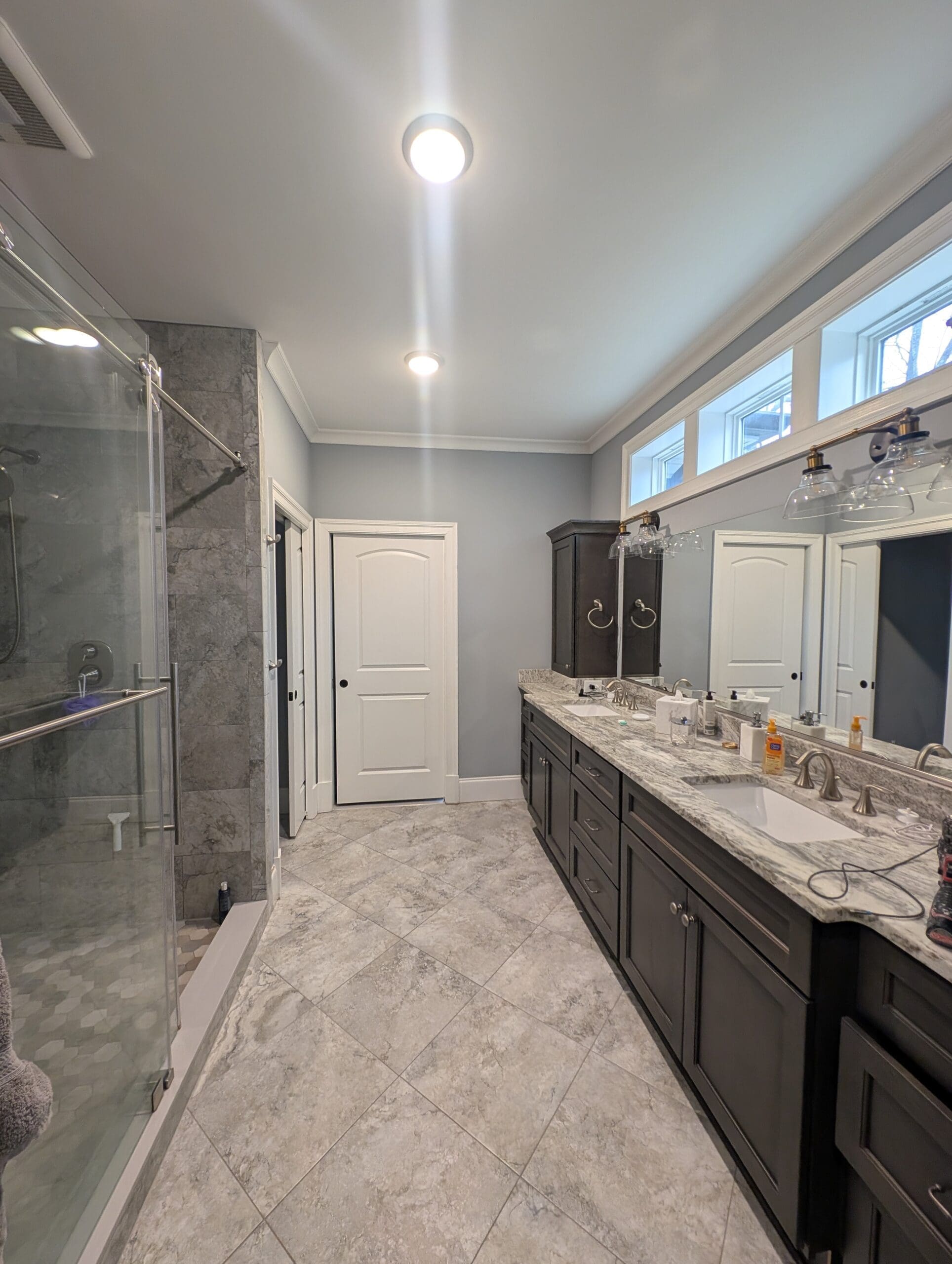
Standard wall paint may struggle on ceilings in high-humidity bathrooms. Moisture can soften the paint film and cause peeling or flaking. Many professionals choose moisture-resistant ceiling paints designed specifically for bathrooms.
Flat ceiling paint remains common due to its ability to hide imperfections and reduce glare from overhead lighting. Specialized bathroom ceiling paints maintain a flat appearance while still resisting mildew growth.
Certain products include color-changing technology that helps during application. Paint goes on tinted and dries to bright white, allowing painters to see where the coating has been applied evenly.
Ceilings above showers benefit from two full coats of high-quality bathroom paint. This thicker protective layer improves moisture resistance and extends the lifespan of the finish.
Oil-Based vs Water-Based Paint in Bathrooms
Oil-based paints once dominated high-moisture environments because of their durability and water resistance. These coatings cure into extremely hard films that resist moisture penetration.
Several disadvantages have reduced their popularity. Strong odors, slow drying times, and complex cleanup requirements make oil-based paints less practical for most residential projects. Environmental regulations have also limited their availability in many regions.
Water-based acrylic paints have advanced significantly over the past two decades. Modern formulations match or exceed the durability of traditional oil paints while offering easier application and faster drying.
Oil-based coatings still appear on certain bathroom elements like wood trim or cabinetry when an ultra-hard finish is required. Acrylic enamel paints now provide similar durability without the downsides of oil products, which makes them a more common choice today.
Surface Preparation Matters More Than Paint Brand
Quality paint performs poorly when applied over improperly prepared surfaces. Bathroom walls often accumulate soap residue, oils from personal care products, and microscopic mold growth. These contaminants prevent paint from bonding properly.
Professional preparation begins with a thorough cleaning using a mild degreasing solution. Areas showing mildew stains should be treated with a mildew-removal cleaner or diluted bleach solution. The surface must dry completely before painting begins.
Glossy surfaces require light sanding to improve paint adhesion. Drywall repairs and patching also occur during preparation to create a smooth surface.
Primers often play an important role in bathroom painting. Moisture-resistant primers seal the surface and improve the adhesion of the topcoat. Stain-blocking primers help prevent previous water stains from bleeding through new paint.
Skipping these preparation steps often leads to early peeling or discoloration. High-quality paint cannot compensate for surfaces that were not properly cleaned, repaired, and primed.
Color Choices That Work Best in Bathrooms
Paint performance matters most, yet color also affects how a bathroom feels and functions. Light colors reflect more light and make small bathrooms appear larger and brighter.
Soft whites, warm neutrals, pale grays, and light blues remain popular choices. These shades create a clean atmosphere that suits most bathroom designs. Lighter tones also highlight cleanliness and make moisture spots easier to notice during cleaning.
Darker colors work well in larger bathrooms or powder rooms where ventilation is strong. Deep navy, charcoal, or forest green can create dramatic contrast when paired with bright trim and fixtures.
Gloss level influences how color appears. Satin and semi-gloss finishes reflect more light, making colors appear slightly brighter. Testing sample patches before painting an entire bathroom helps determine how the color reacts to lighting and sheen.
Long-Term Maintenance for Bathroom Paint
Even the best bathroom paint benefits from routine care. Proper ventilation reduces the amount of moisture that accumulates on painted surfaces. Exhaust fans should run during showers and remain on for several minutes afterward to remove lingering humidity.
Regular cleaning also extends the life of bathroom paint. Mild soap and water remove residues that could weaken the paint film over time. Abrasive cleaners should be avoided since they can dull the finish.
Small areas of mildew should be addressed quickly. Early cleaning prevents spores from spreading and keeps the paint looking fresh.
Professional painters typically recommend repainting bathrooms every five to seven years, depending on usage and ventilation. High-moisture bathrooms may require attention sooner, particularly if inferior paint was used previously.
Final Thoughts
Bathroom paint must handle constant humidity, temperature changes, and frequent cleaning. Acrylic latex paints with mildew resistance and satin or semi-gloss finishes offer the most reliable performance for most residential bathrooms.
Product quality matters, yet preparation and application techniques remain just as important. Clean surfaces, proper priming, and adequate ventilation significantly extend the life of bathroom paint.
Homeowners who select high-quality paint and prepare the surface correctly usually enjoy years of durable, attractive results. Bathroom walls remain brighter, cleaner, and resistant to peeling or mildew, even in high-humidity conditions.