
Safe Paint Options for Families: A Practical Guide from a Painting Professional
Paint does more than change the color of a room. It shapes how a home feels, how it smells, and even how healthy the air is for the people living inside it. Families with children, pets, or anyone sensitive to chemicals often start asking the right question: what’s actually in the paint on our walls?
Years of hands-on work inside homes and on job sites have shown that choosing safer paint is less about chasing labels and more about understanding what those labels really mean. Smart decisions come from knowing how paint behaves during application, how it cures, and how it continues to affect indoor air over time.
Alpha Painting LLC often helps homeowners navigate these choices during real projects, especially when families want a balance between durability, appearance, and indoor air quality. That balance is absolutely possible with the right products and approach.
Table of Contents
What Makes Paint “Safe” for Families
Safety in paint comes down to what gets released into the air and what remains on the surface after it dries. Volatile Organic Compounds, commonly called VOCs, are the primary concern. These compounds evaporate into the air during and after painting, creating that strong “fresh paint” smell most people recognize.
High VOC levels can irritate the eyes, nose, and throat. Some families notice headaches or dizziness after painting, especially in poorly ventilated spaces. Children and pets are more sensitive due to their size and exposure levels.
Low-VOC and zero-VOC paints reduce those airborne chemicals significantly. Zero-VOC paints typically contain less than 5 grams per liter, while low-VOC paints may go up to 50 grams per liter depending on the type. Those numbers matter, but they don’t tell the full story.
Safety also includes how the paint performs over time. A coating that resists mold, mildew, and frequent scrubbing helps maintain a cleaner environment long after application.
Understanding Paint Labels Without the Confusion
Many paint cans carry labels like “eco-friendly,” “natural,” or “green.” Those terms sound reassuring, but they aren’t always regulated in a consistent way. Certifications offer a more reliable guide.
Look for third-party certifications such as Green Seal, GREENGUARD, or similar standards. These programs test paints for emissions and chemical content under controlled conditions. Products that pass those tests meet strict limits designed for indoor environments like schools and healthcare facilities.
Water-based paints, also called latex paints, are generally safer than oil-based options. Oil-based coatings contain stronger solvents and release more VOCs during drying. Modern water-based paints have improved dramatically in durability and finish, making them suitable for most residential surfaces.
Natural paints made from ingredients like clay, lime, or plant oils appeal to homeowners looking for the lowest possible chemical exposure. These products work well in certain applications, though they may require more maintenance or specific surface preparation.
Reading the label carefully helps avoid assumptions. Terms like “low odor” do not always mean low emissions. Odor is only one part of the equation.
Best Paint Types for Family Homes
Different rooms demand different performance characteristics. A safe paint should also hold up to daily wear without constant repainting.
Walls in living areas benefit from low-VOC acrylic latex paints. These provide a durable finish that resists scuffs and can be cleaned without damaging the surface. Eggshell or satin finishes strike a good balance between appearance and washability.
Bedrooms, especially for children, are ideal spaces for zero-VOC paints. Reduced emissions matter most in areas where people spend long hours. A soft matte or eggshell finish works well here, offering a calm appearance without trapping dirt.
Kitchens and bathrooms present a different challenge. Moisture resistance becomes critical. Low-VOC paints with antimicrobial properties help prevent mold growth while maintaining safer air quality. Semi-gloss finishes are often used in these areas due to their resistance to moisture and ease of cleaning.
Trim, doors, and cabinets require tougher coatings. Waterborne alkyd paints provide the smooth finish of traditional oil-based paints without the high VOC levels. These are a strong option for families wanting durability without sacrificing indoor air quality.
The Role of Proper Ventilation During Painting
Even the safest paint benefits from proper airflow. Application conditions affect how quickly emissions dissipate and how evenly the paint cures.
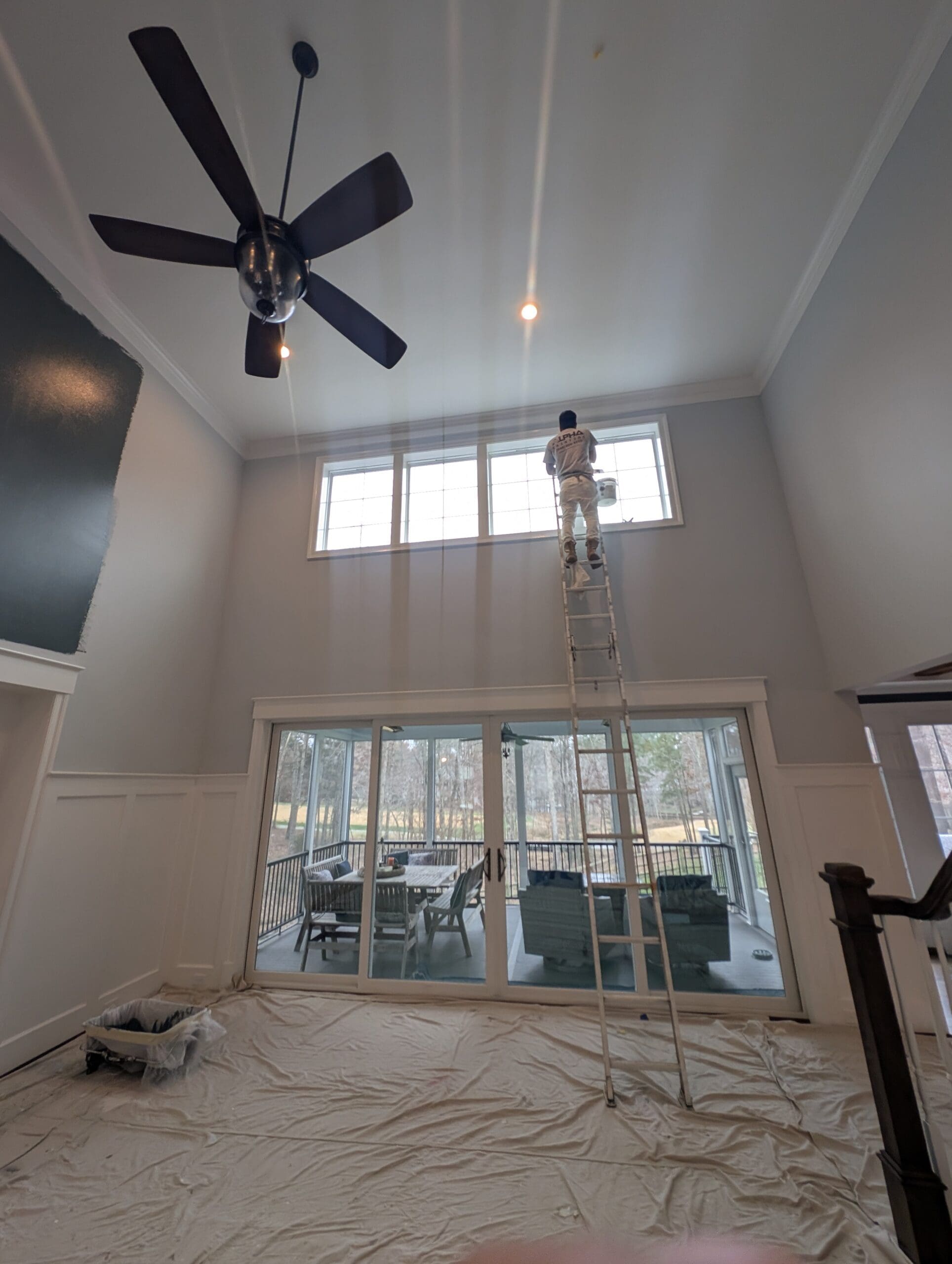
Windows should remain open during painting whenever possible. Fans placed strategically can help move air out of the space rather than simply circulating it around the room. Cross-ventilation, where fresh air enters from one side and exits from another, speeds up the process significantly.
Painting during mild weather helps as well. Extreme humidity or cold temperatures can slow drying times, keeping VOCs in the air longer than necessary.
Families often make the mistake of sealing up a room to “contain the mess.” That approach traps fumes inside and increases exposure. A better method involves isolating the workspace with plastic barriers while still allowing fresh air to flow through.
Safe Painting Practices Beyond the Product
Paint selection is only part of the equation. The way a project is handled plays a major role in maintaining a safe environment.
Surface preparation should avoid excessive dust. Sanding old paint, especially in older homes, may release harmful particles. Dustless sanding systems or wet sanding methods help reduce airborne contaminants.
Primers should match the safety standards of the topcoat. Using a high-VOC primer under a low-VOC paint defeats the purpose of choosing safer materials.
Cleaning tools and spills should be handled with mild, non-toxic solutions whenever possible. Harsh solvents introduce additional chemicals into the home environment.
Timing also matters. Painting when children or pets can stay elsewhere for a day or two reduces direct exposure. Even low-VOC paints benefit from a short curing period before full use of the space.
Long-Term Benefits of Choosing Safer Paint
A home painted with low-emission products feels different over time. Air remains fresher, and lingering odors are minimal. Families with allergies or sensitivities often notice fewer symptoms after switching to safer paints.
Durability plays a role in long-term safety as well. High-quality, low-VOC paints resist peeling, chipping, and staining. Fewer repaints mean fewer exposures to chemicals over the years.
Maintenance becomes easier when surfaces are designed to withstand cleaning. Walls that can be wiped down without damage help keep indoor spaces healthier, especially in homes with young children.
Property value can also benefit. Buyers are increasingly aware of indoor air quality and environmentally responsible materials. A well-documented use of safer paints can become a subtle selling point.
Common Misconceptions About Safe Paint
Many homeowners assume that all modern paints are equally safe. That’s not the case. Regulations have improved overall standards, but significant differences still exist between products.
Another common belief is that zero-VOC paint has poor coverage or limited color options. That used to be true years ago. Current formulations perform just as well as traditional paints in most scenarios.
Some people think natural paints are always the best choice. Those products can be excellent, but they may not suit every surface or climate. Performance and maintenance requirements should always be considered alongside safety.
Price is another concern. Safer paints often cost more upfront, but the difference is usually modest when compared to the overall project cost. Better durability and fewer repaints help offset that initial investment.
Final Thoughts from the Field
Choosing safe paint options for a family home is less complicated than it first appears. Focus on low or zero VOC content, verify certifications, and match the paint type to the demands of each space. Pay attention to how the project is executed, not just the product on the label.
A well-planned paint job should improve both the look and the livability of a home. Cleaner air, durable finishes, and thoughtful application methods create an environment where families can feel comfortable every day.
Paint should never be an afterthought when it comes to health. Smart choices during a painting project can make a lasting difference long after the final coat dries.