
Best Paint for Exterior Wood Door: What Actually Holds Up and Looks Great
A front door takes more abuse than almost any other painted surface on a home. Sun exposure, humidity swings, rain, and daily use all work against the finish. Choosing the right paint matters just as much as the prep work and application method. A well-selected coating protects the wood, holds color longer, and keeps the door looking sharp year after year.
Homeowners who want a long-lasting finish often reach out to professionals like Alpha Painting LLC for proper prep and application, since even the best paint can fail quickly without the right process behind it. That said, understanding the material itself gives you a big advantage whether you’re hiring out the job or handling it yourself.
Table of Contents
Why Exterior Wood Doors Need Specialized Paint
Exterior wood doors expand and contract with temperature and moisture changes. That movement stresses the paint film constantly. Standard interior paint or low-grade exterior coatings tend to crack, peel, or fade faster because they aren’t built to handle that level of stress.
A quality exterior paint for wood doors needs flexibility, strong adhesion, and resistance to UV rays. Those three traits determine how long the finish will last and how well it protects the wood underneath. Without proper protection, moisture seeps into the grain, leading to swelling, warping, and eventually rot.
Paint also needs to resist dirt and oils from frequent handling. A front door sees constant contact, so durability isn’t just about weather—it’s about wear.
Oil-Based vs. Water-Based Paint: What Performs Better?
Oil-based paint used to be the go-to choice for exterior wood doors. It penetrates wood deeply and creates a hard, durable finish. That toughness helps resist scratches and dents, which is valuable for a high-traffic entry point. Oil-based coatings also level out nicely, giving a smooth, professional appearance.
Drawbacks show up over time. Oil-based paint tends to yellow, especially on lighter colors. It also becomes brittle as it ages, which can lead to cracking under temperature shifts. Cleanup requires solvents, and drying times are longer, which slows down the project.
Water-based acrylic paints have come a long way and are now the preferred option for most exterior doors. High-quality acrylic latex paint offers excellent flexibility, which allows it to expand and contract with the wood. That flexibility prevents cracking and peeling. Color retention is another major advantage, especially under strong sunlight.
Modern acrylic paints also resist mildew and are easier to maintain. Faster drying times mean less downtime, and cleanup is simple with water. A premium acrylic exterior paint often outperforms oil-based options in long-term durability.
Choosing the Right Finish for a Front Door
Paint sheen plays a major role in both appearance and durability. Flat or matte finishes don’t work well on doors. They absorb moisture more easily and are harder to clean.
Satin or semi-gloss finishes strike the right balance. Satin offers a softer look while still providing decent durability. Semi-gloss is more resistant to moisture and easier to wipe clean, making it a strong choice for front doors exposed to heavy use and weather.
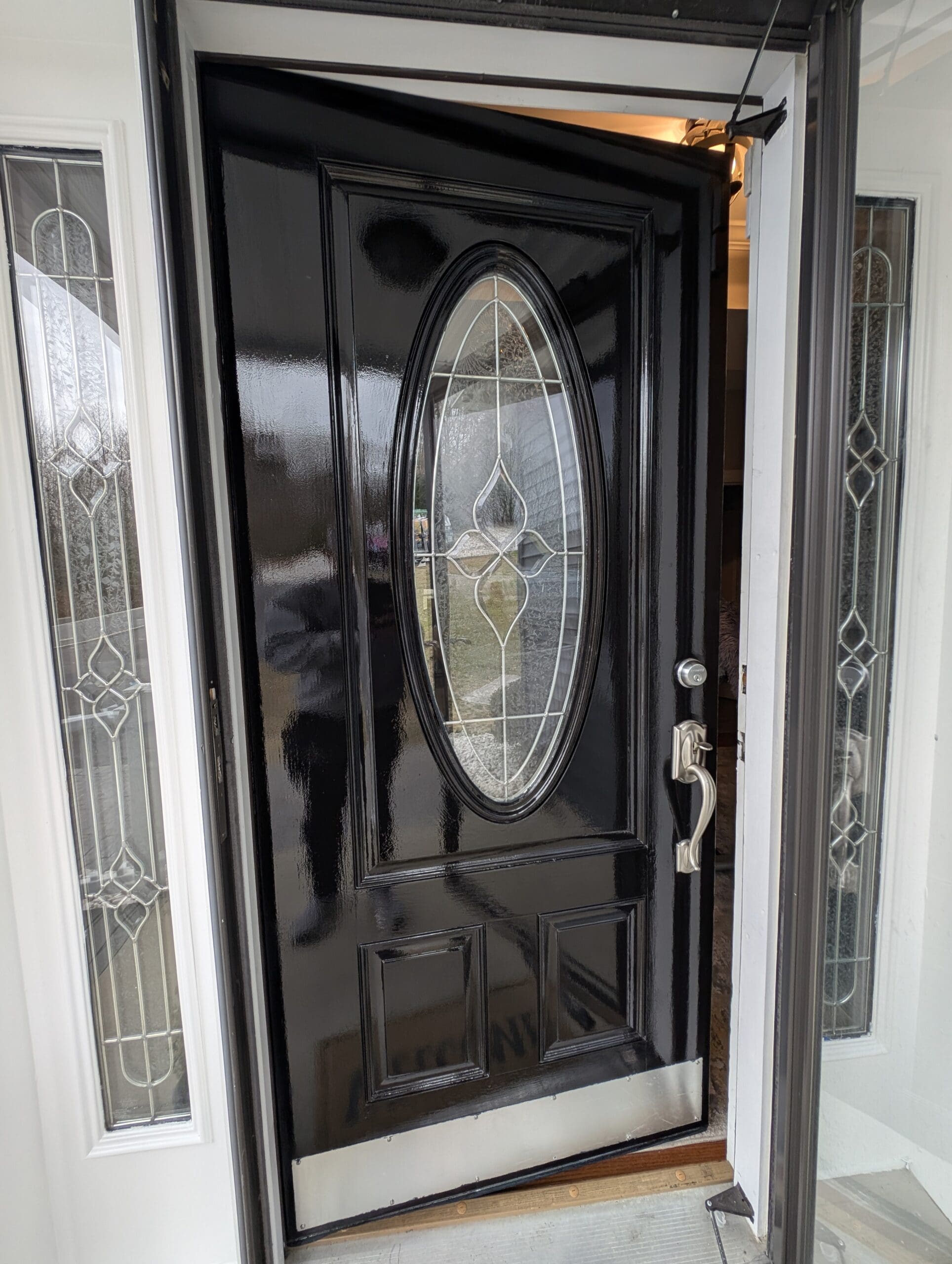
High-gloss finishes create a striking look and are extremely durable, but they highlight surface imperfections. Any dents, wood grain inconsistencies, or prep issues become more noticeable. That level of sheen demands near-perfect surface preparation.
Key Features to Look for in Exterior Door Paint
A high-performing paint isn’t just about brand recognition. The formulation matters. Acrylic resins, UV blockers, and mildewcides all play a role in how the paint performs over time.
Look for paints labeled as exterior-grade acrylic latex with weather resistance. UV resistance prevents fading and chalking, which is especially important for darker colors. Flexibility helps the paint move with the wood instead of cracking.
Adhesion is another critical factor. A paint that bonds tightly to the surface resists peeling, even under harsh conditions. Many premium paints include built-in primers or enhanced bonding agents, though a separate primer is still recommended for raw or heavily weathered wood.
Best Types of Paint for Exterior Wood Doors
Several categories of paint consistently perform well on wood doors. Each offers slightly different advantages depending on climate and door exposure.
Acrylic latex exterior paint stands at the top for most applications. It balances durability, flexibility, and color retention better than most alternatives. Brands like Sherwin-Williams and Benjamin Moore produce high-end exterior acrylics that are widely trusted by professionals.
Alkyd-modified latex paint blends the benefits of oil and water-based formulas. It provides a harder finish than standard latex while maintaining easier cleanup and better color stability than traditional oil paint.
Marine-grade paint is another option for doors exposed to extreme moisture, such as coastal environments. These coatings are designed for harsh conditions and offer exceptional protection against water intrusion.
Surface Preparation: Where Most Paint Jobs Fail
Paint quality matters, but preparation determines success. Skipping steps or rushing through prep leads to early failure, regardless of how expensive the paint is.
A proper prep process starts with cleaning. Dirt, oils, and mildew must be removed completely. A mild detergent or specialized cleaner works well for this step. Sanding follows to smooth the surface and create a profile that helps the paint bond.
Old peeling paint should be scraped and feathered out. Any bare wood areas need priming before painting. A high-quality exterior primer seals the wood and improves adhesion. Without primer, even the best paint struggles to hold up.
Edges and panels deserve extra attention since those areas often wear faster. Taking time here makes a noticeable difference in how long the finish lasts.
Climate Considerations That Affect Paint Choice
Climate plays a huge role in how paint performs. Hot, sunny regions demand strong UV resistance. Without it, colors fade quickly and the surface begins to chalk.
Humid areas require mildew-resistant paint. Moisture creates the perfect environment for mold growth, especially on shaded doors. Paints with built-in mildewcides help prevent that issue.
Cold climates introduce freeze-thaw cycles that stress the paint film. Flexibility becomes even more important in those conditions. A rigid coating is more likely to crack as the wood expands and contracts.
Wind-driven rain also affects durability. Doors that face direct weather exposure benefit from thicker, high-build coatings that offer better protection.
Color Choice and Its Impact on Performance
Color affects more than just appearance. Dark colors absorb more heat, which increases expansion and contraction in the wood. That added movement can shorten the lifespan of the paint if the coating isn’t flexible enough.
Lighter colors reflect heat and tend to last longer under direct sunlight. They also show less fading over time. That doesn’t mean dark colors should be avoided, but they require higher-quality paint and careful maintenance.
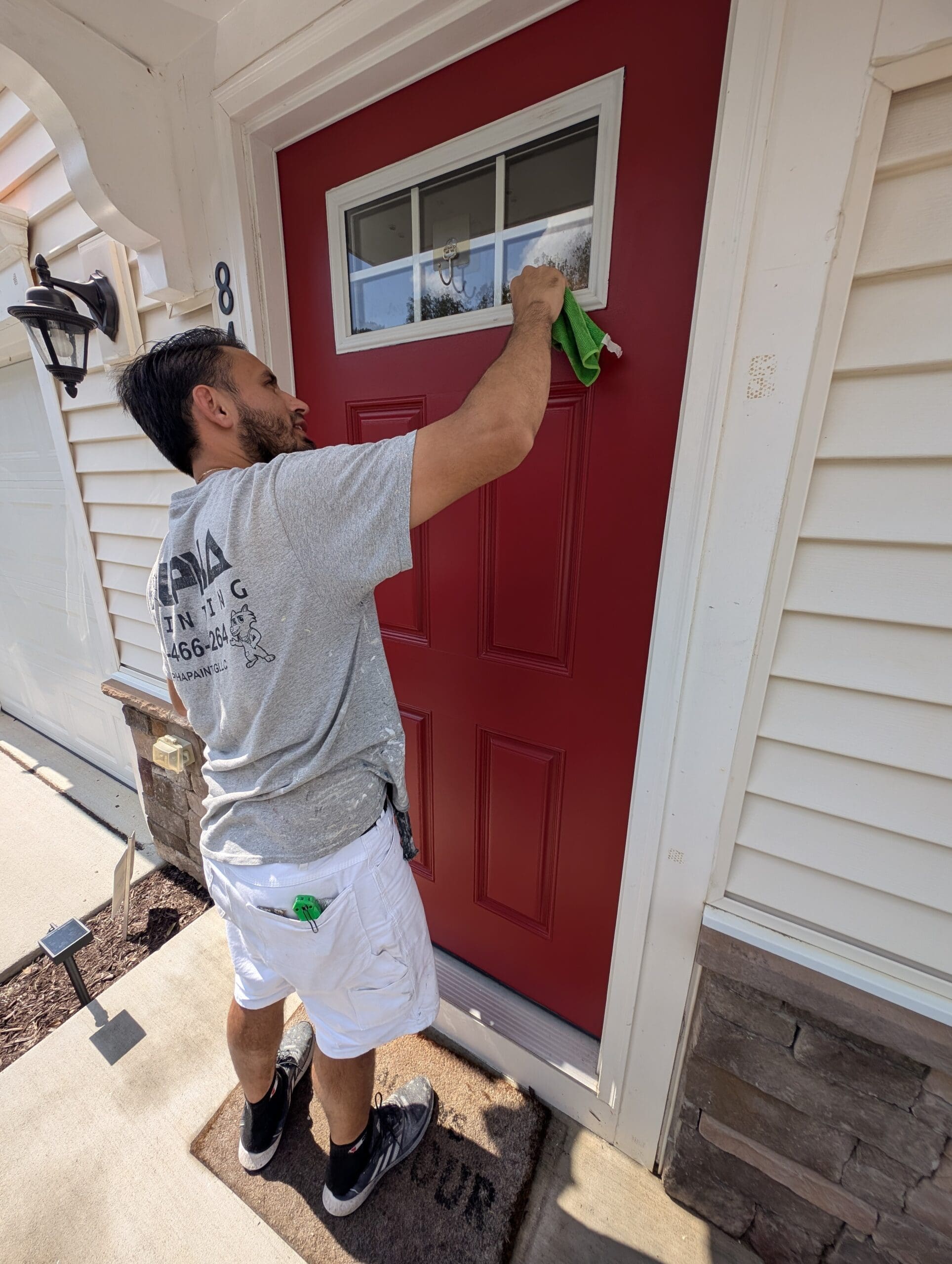
Bold colors like deep red, navy, or black create strong curb appeal, but they need top-tier UV resistance to maintain their appearance. Choosing a premium product becomes even more important when going with darker shades.
Maintenance Tips to Extend the Life of Your Door Paint
Even the best paint needs occasional care. Regular cleaning helps prevent buildup that can degrade the finish. A simple wipe-down with mild soap and water every few months keeps the surface looking fresh.
Inspect the door periodically for chips or cracks. Touching up small problem areas early prevents moisture from getting into the wood. Waiting too long often leads to larger repairs.
Weather stripping and proper sealing around the door also protect the paint job. Water intrusion around edges can undermine even a well-applied coating.
Repainting intervals vary depending on exposure and paint quality. A well-painted door using premium materials can last five to ten years before needing a full repaint.
Final Thoughts
Acrylic latex exterior paint stands out as the best overall choice for most exterior wood doors. It offers the flexibility, durability, and color retention needed to handle changing weather and daily wear. Oil-based options still have their place in certain situations, but modern acrylics outperform them in most residential settings.
Success comes from pairing the right paint with proper preparation and application. Skipping steps or choosing lower-quality materials usually leads to more frequent repainting and higher long-term costs.
A front door sets the tone for the entire home. Investing in the right paint and process keeps it looking sharp while protecting the wood underneath for years to come.